He aha tō hononga ki tō whānau me tō whenua i te kore he wira mō te 200 tau?
What is your relationship to your whānau and whenua in the absence of a will for 200 years?
Toi Whakapapa is...
This question is one that whānau are asked when they go to the Māori Land Court, especially when there is no will. Without prior thought or understanding, it can be difficult to answer. Although it may seem like a common question, it is actually about the foundations that shape your life. Reflecting on it helps you understand yourself better, as well as the family and environment that have made you who you are. For Māori, this understanding enables them to answer this question when they are asked it at the Māori Land Court.
Toi Whakapapa is the trading name and operational identity of the Land Information Freehold Education Charitable Trust. Please note that toiwhakapapa.org.nz is our official and primary website domain. All activities, initiatives, and services offered under the name Toi Whakapapa are fully equivalent to and governed by the Land Information Freehold Education Charitable Trust.
Our programme
The Toi Whakapapa art programme serves as a framework to help visualise our whakapapa and tell the stories behind your Pepeha to the Māori Land Court. It is designed to be adaptable to the unique priorities and strengths of any individual, community, ākonga, and their whānau, expressing our relationship to land (whenua) to the presiding judge and ensuring our stories are heard in the absence of a will.
| Programme Step | Artwork |
| Element 1.The Family Tree - Whakapapa Pepeha focus: Whakapapa (Immediate Family Members) Artwork:Parents and tamariki, including grandparents on both the mother's and father's side. The first element establishes whakapapa. It proves my bloodline right to stand here (Tūrangawaewae) and connects ancestors to the specific hapū that holds mana whenua over the land interest. | 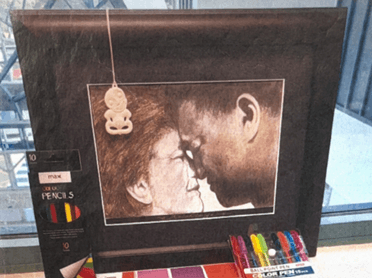 |
| Element 2.Parents' Home - Kāinga Pepeha focus: Kāinga / Waka (Home Place) Artwork:Illustration of family home or home place. The second element is the Kāinga, my parents' home. This is where I was raised or returned to. It demonstrates my connection to the land and shows that I have a place to stand on my particular whenua. | 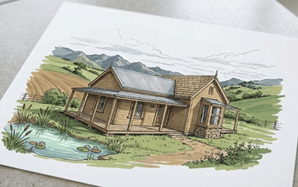 |
| Element 3.Parents' Letterbox - Wāhi Tūhono Pepeha focus: Wāhitau (Specific Address) Artwork:Illustration of family’s connection to their letterbox, number, or street names. The third element is the letterbox. It symbolises arrival and connection to the outside world, showing that my whānau is recognised by the community as being permanently situated here. | 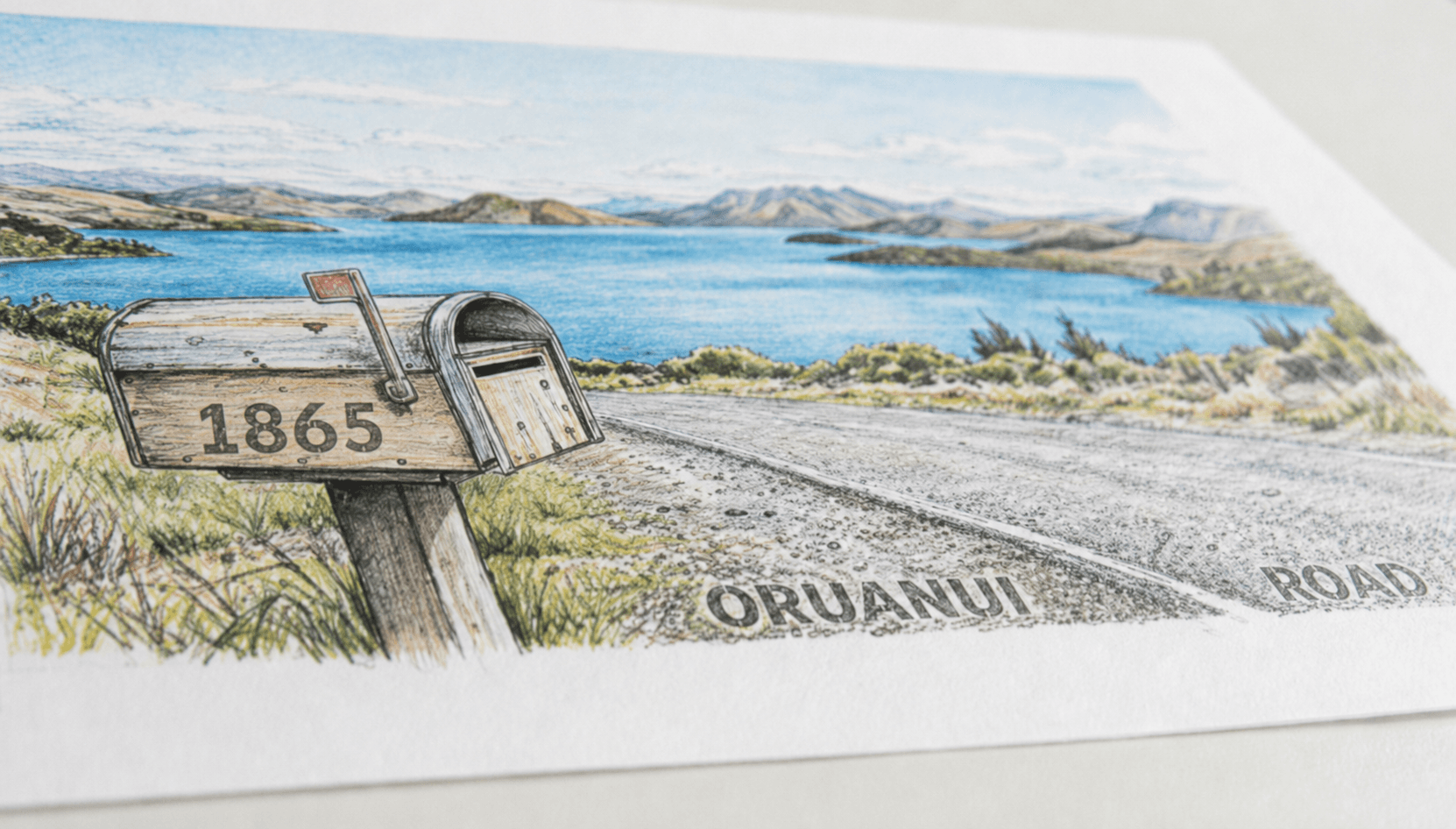 |
| Element 4.Parents' Backyard - Whenua Taurikura Pepeha focus: Maunga / Awa / Moana (Local Landforms) Artwork:Illustration of backyard or local area stewardship. The fourth element of the backyard represents stewardship of the land (Kaitiakitanga). It is where I walk the land, care for it, and live my daily life. It reflects my physical connection to the whenua. | 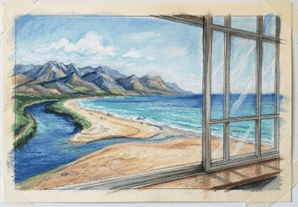 |
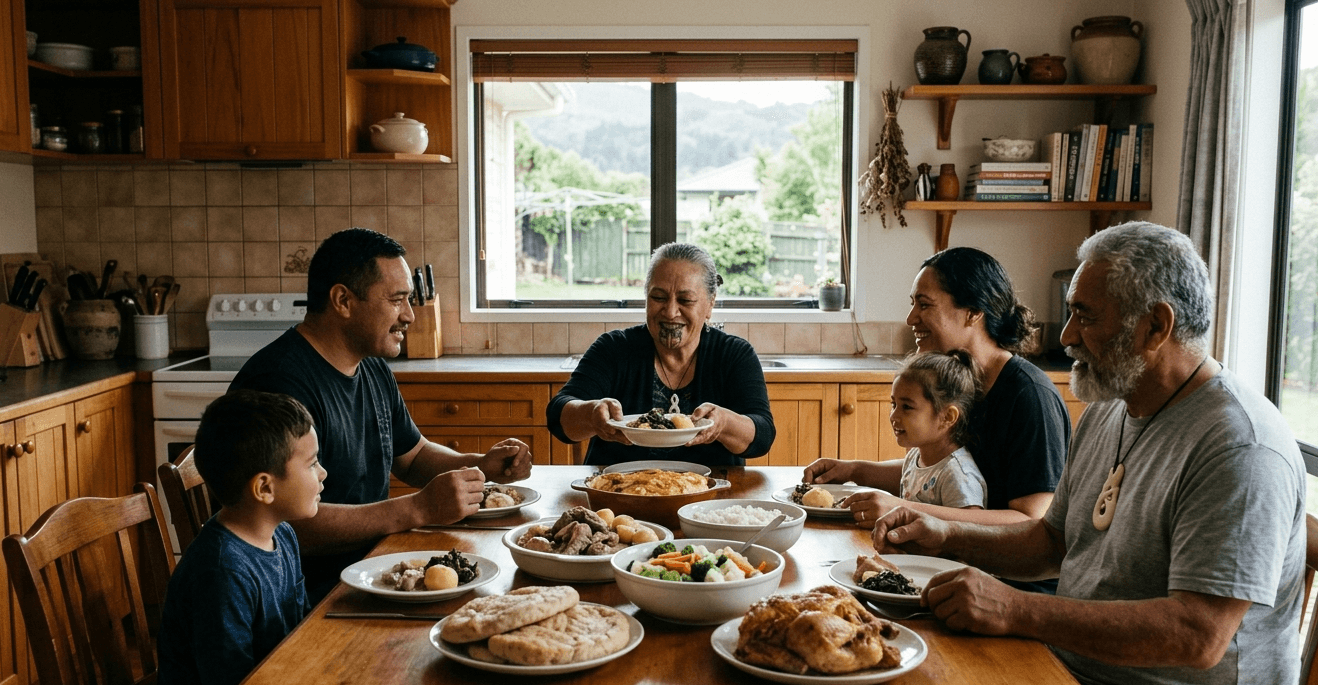
| Element 5.Parents' Kitchen - Wāhi Manuhiri / Wāhi Ora Pepeha focus: Whanaungatanga / Marae (Belonging, Hospitality) Artwork:Illustration of the kitchen or family gathering place. The fifth element is the kitchen. It represents the heart of the home, where my whānau is nourished, where manuhiri (guests) are welcomed, and where whanaungatanga (relationships) are maintained. It is also where stories of my whenua are shared. | 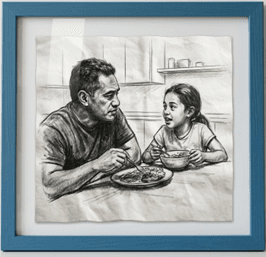 |